Tag: social justice

  • The Importance of Compassion in Times of Crisis

    The Importance of Compassion in Times of Crisis

    There are moments in history when the weight of the world feels especially heavy. When laws, power, and human suffering collide, and many hearts are left grieving, confused, or afraid. We are living in one of those moments.

    As Christians, we do not begin with politics.
    We begin with people.

    Scripture tells us, again and again, that God sees the stranger. The sojourner. The one without protection. The one far from home. These are not abstract ideas in the Bible. They are beloved neighbors whom God names and defends.

    To follow Jesus is to hold both truth and mercy in our hands at the same time. It is to acknowledge that nations have laws, while also insisting that no law has the right to strip a person of their God-given dignity. The Gospel never gives us permission to harden our hearts in the name of order.

    Jesus Himself was once a child whose family fled violence. A refugee, carried by His parents into a foreign land for safety. He knows what it is to be vulnerable. He knows what it is to depend on the mercy of others.

    In seasons like this, many are waiting –
    waiting for justice,
    waiting for compassion,
    waiting for policies shaped by wisdom rather than fear.

    Waiting is painful. It stretches us. It exposes our limits. And yet Scripture reminds us that waiting with God is not passive. It is an act of trust. It is a refusal to give up on love.

    Lament has a place here. We are allowed to grieve what is happening. We are allowed to say, This is not right. We are allowed to cry out to God on behalf of children, families, and communities living in uncertainty.

    And still, we stay rooted in hope.

    The Christian calling is not to win arguments, but to witness to a different way – a way where mercy has the final word, where fear does not rule our decisions, and where love remains active even when the road forward feels unclear.

    From this porch, we pray.
    We listen.
    We refuse to look away.

    And we trust that God is still at work, even in the waiting.

    “The Lord watches over the foreigner and sustains the fatherless and the widow.”
    Psalm 146:9


    God of mercy and justice,
    We bring before You all who are living in uncertainty
    those far from home, those seeking safety,
    and those carrying fear, grief, or exhaustion in this season.

    Teach us to see every person as You see them:
    beloved, worthy, and made in Your image.
    Guard our hearts from indifference,
    and shape our actions with compassion, wisdom, and humility.

    As we wait – for healing, for justice, for paths forward
    help us remain rooted in love rather than fear.
    May Your presence be near to the vulnerable,
    and may we be faithful in how we love our neighbors.

    We place our trust in You,
    who watches, sustains, and never looks away.
    Amen.
  • Finding Renewal Through God’s Mercy

    Finding Renewal Through God’s Mercy

    “Wash me, and I will be whiter than snow.” — Psalm 51:7

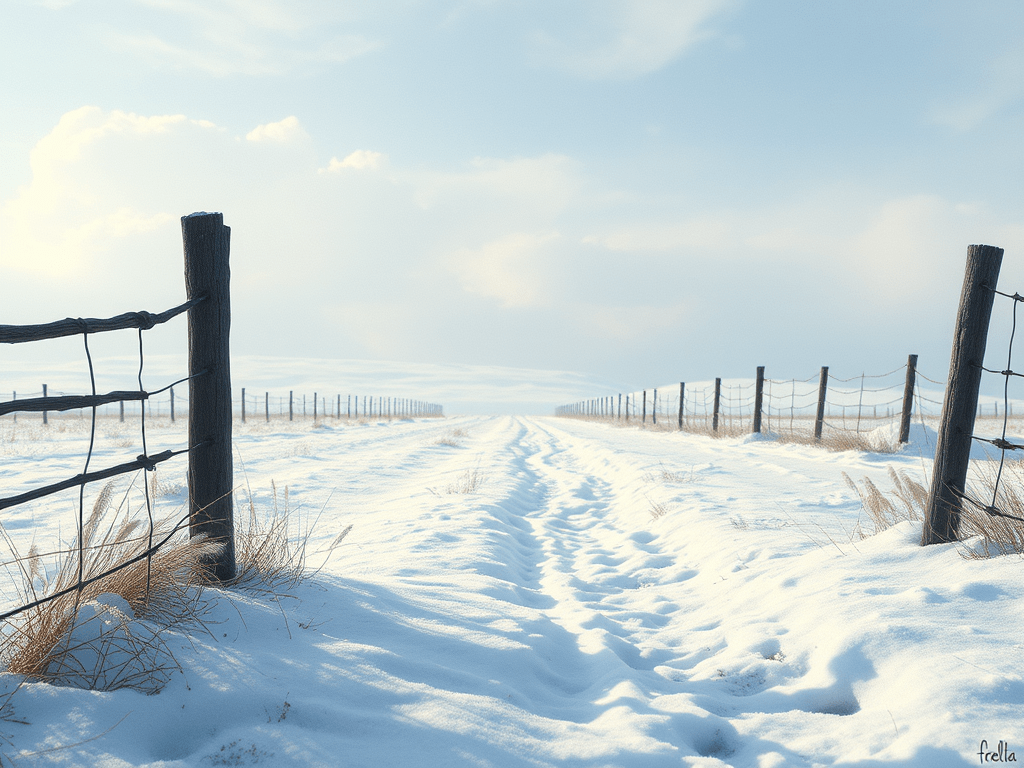
    Today, snow is falling across the country. It covers what is worn, stained, and uneven. Roads are quiet. Edges soften. What was harsh only moments before is muted beneath a clean, white blanket.

    David’s prayer in Psalm 51 comes from a place of deep awareness of failure, regret, and the longing to be made new. He does not ask to be excused or explained away. He asks to be washed. To be cleansed. To be restored from the inside out.

    Snow does not erase what lies beneath it, but it changes how we see the landscape. In the same way, God’s mercy does not deny the truth of our brokenness – it covers us with grace that invites healing and renewal. What feels heavy, marked, or beyond repair is not beyond God’s ability to make clean.

    On days like today, when the world feels strained and hearts feel weary, this verse offers a quiet hope. Not the kind that shouts or rushes ahead, but the kind that falls gently, snowflake by snowflake, reminding us that God is still at work, still cleansing, still making all things new.

    Perhaps today’s snowfall is not an answer, but an invitation. To pause. To breathe. To trust that even now, God’s mercy is falling – silently, steadily over us and this land.

    Lord,
    As snow falls quietly today, we ask that Your mercy would fall just as gently upon us.
    Wash our hearts, restore what feels worn, and make us new again.

    Help us to trust in Your cleansing grace and to rest in the hope that You are still at work.
    Amen.

  • Staying Grounded: The Path to Compassionate Truth

    Staying Grounded: The Path to Compassionate Truth

    “The party told you to reject the evidence of your eyes and ears.
    It was their final, most essential command.”
    George Orwell, 1984

    There are times when the world grows loud not with truth, but with insistence. When explanations arrive quickly, neatly packaged, asking us to doubt what we’ve seen, what we’ve heard, what we feel stirring deep within.

    Orwell’s warning was not only about power – it was about perception. About what happens when people are taught to override their own senses, to distrust their inner knowing, to silence the quiet voice that says, something isn’t right.

    This kind of erosion rarely happens all at once. It happens slowly. Through softened language. Through distraction. Through the steady suggestion that clarity is dangerous and questions are disloyal.

    On the Prayer Porch, we choose a different posture.

    We pause instead of rushing to accept what’s handed to us.
    We honor the evidence of our eyes and ears.
    We allow discomfort to teach us rather than numb us.

    Truth doesn’t always arrive fully formed, and discernment takes patience. But abandoning our conscience is never the cost of peace. Peace begins when we remain awake, attentive, and rooted in compassion – even when doing so feels unsettling.

    May we resist the invitation to forget what we know.
    May we stay human in a world that sometimes asks us not to be.

    What helps you stay grounded in truth and compassion when clarity feels inconvenient?

  • Choosing Peace When the World Escalates

    Choosing Peace When the World Escalates

    There are moments when the world feels charged with conflict- when power is met with power, and harm is answered with more harm. In those moments, it can seem as though force is the only language being spoken.

    But experience teaches us something quieter and truer:
    Two wrongs do not make a right. They only deepen the wound.

    When retaliation becomes the response, suffering spreads outward – touching families, communities, and futures we may never see. The cost of escalation is almost always paid by those with the least voice.

    Here on the Prayer Porch, we choose to pause rather than react. We acknowledge the fear, grief, and anger that naturally rise but we do not let them drive the next step. Peace does not mean agreement, and it does not mean ignoring injustice. It means refusing to answer harm with more harm.

    Peace asks us to slow down.
    To remember shared humanity.
    To choose restraint in a world that rewards force.

    This choice is not weakness. It is moral courage. It is the steady belief that dignity matters, even in disagreement. That wisdom grows in stillness. That healing cannot be rushed or coerced.

    When the world escalates, choosing peace becomes a quiet act of resistance – one that begins within us and moves outward, step by step.

    Where might you be invited today to respond with pause, compassion, or restraint instead of reaction?

    May we be guided by wisdom rather than fear, by compassion rather than vengeance. May our words, choices, and actions contribute to healing rather than harm and may peace take root first within us. 🤍

  • Civil Disobedience and Conscience: A Modern Reflection

    Civil Disobedience and Conscience: A Modern Reflection

    I step out onto my little back porch – the dusk settling over the trees, the hush before voices rise. On this threshold between inside and out, I’m drawn to a stirring in my spirit. I remember a 19th-century man from Concord, MA who dared to question law and power. He did this by refusing to pay unjust taxes. His name was Henry David Thoreau. Henry was an American naturalist, essayist, poet, and philosopher. A leading transcendentalist, he is best known for his book Walden. It is a reflection upon simple living in natural surroundings. He is also renowned for his essay “Civil Disobedience,” which argues in favor of citizen disobedience against an unjust state.

    Thoreau believed that “that government is best which governs least.” He also thought that “that government which governs not at all” would eventually be true. He argued for the primacy of conscience over blind obedience. He saw that participating in injustice even by compliance has the ability to corrupt the soul. Thus, he refused to pay a poll tax that funded a government complicit in slavery and aggressive war.

    Many will gather this year on October 18, 2025 for No Kings Day. This day is a modern echo of Thoreau’s conviction that true freedom requires accountability. The movement asserts that power does not belong to monarchs or unchecked rulers. Power belongs to the people who live by conscience and community.

    On my porch, I sense the same quiet courage Thoreau once wrote about. It is the kind that begins not in crowds or slogans. It begins in silence. Resistance often starts with stillness. It is a whispered prayer. It is a question that refuses to be silenced. It is a heart that chooses what is right even when it is not easy.


    ✦ Then and Now, Side by Side

    AspectThoreau’s TimeOur Time
    InjusticeSlavery, unjust warsCivil rights, truth, equality
    ConscienceOne man in jail for refusing injusticeMany voices rising for justice
    CourageMoral resistancePeaceful action
    Spiritual focusIntegrity and truth before GodFaith and justice intertwined

    • Sit quietly tonight. Let the air around you settle.
    • Ask yourself: What authority shapes my choices? Where must I resist?
    • Pray for courage — not anger, but steady conviction.
    • Listen for the voice that calls you to act with peace, not pride.
    • Choose one small act that reflects integrity: a letter, a donation, a conversation, a prayer.

    🕊️ A Prayer for Courage and Conscience

    O God of justice and mercy,
    Let our voices, our breath, our small steps be part of Your work.
    Grant us the courage to stand when power grows unjust. Help us to resist with love, not hatred. We will yield our conscience to You alone.
    May we walk in freedom, grounded in truth and guided by peace.
    Amen.


    As we stand for justice and conscience, may we also stand for safety and peace. Civil disobedience, in its truest form, is never about destruction – it’s about devotion to what is right and human. When we act, may we do so with wisdom, empathy, and restraint. We should remember that the little eyes watching us learn from how we respond to the world.

    Our children will one day inherit the society we shape today. Let them see that courage can be kind. Let them see that conviction can coexist with compassion.


    Porch Question:

    How can your quiet courage become the light your children see and remember?


  • Finding Peace in Uncertain Times

    Finding Peace in Uncertain Times

    It’s no secret that life in America feels unsettled right now. The news is heavy, conversations can quickly become divided, and many of us carry quiet worries about the future. It’s hard not to feel the tension.

    Even in seasons like this, there are places of steadiness we can return to. These include kindness, listening, and the simple act of being present with one another. These aren’t small things. They are bridges that help us move beyond the noise and back toward our shared humanity.

    Scripture reminds us of peace for those who walk in faith. It says, “Peace I leave with you; my peace I give you” (John 14:27). For all of us, peace can become a practice. No matter our background, we can choose calm when everything around us feels uncertain.

    The world around us can feel shaky. Slowing down is important. Choosing how we respond can be a quiet act of courage. A kind word, a pause before reacting, or even taking time away from screens to rest – these choices matter. They remind us that while we can’t control everything, we can nurture peace within ourselves and offer it to others.

    A Porch Reflection ✨

    When was the last time you felt truly steady – even for just a moment? What helped you feel that way, and how might you return to it this week?


    End your day by naming one way you showed kindness, however small.

    Take a break from headlines today. Step outside, notice the air, the light, the quiet.

    Before a conversation that might feel tense, pause and remind yourself: “This person has fears and hopes, just like me.”

    Some families and communities find it helpful to have a prayer bowl on the coffee table. They place it in a room where they gather to pray. Whenever someone asks for prayer, they write the request on a little piece of paper. They put the paper in the bowl. When it’s time for morning or evening prayer, each person can take a few slips of paper from the bowl. They read the requests. This is also a good way to remember people we don’t see every day. We can think of children in war zones. We should also consider victims of human trafficking.

    We may not solve every challenge in our nation overnight. Together, we can create circles of peace. And when those circles overlap – porch by porch, heart by heart – something steadier begins to grow.


  • Hope Amid Chaos: Lessons from Corrie Ten Boom

    Hope Amid Chaos: Lessons from Corrie Ten Boom

    The world feels heavy these days. The headlines are noisy. Politics are divisive. It can be hard to find hope when fear and anger seem to dominate the landscape. But history reminds us that God’s Spirit has never stopped producing fruit even in the most barren times.

    One woman who lived this truth was Corrie Ten Boom. During World War II, she and her family hid Jews in their Dutch home. They risked everything out of obedience to Christ. When discovered, Corrie and her sister Betsie were sent to Ravensbrück concentration camp, a place of unimaginable cruelty. Yet even there, the light of the Holy Spirit shone through Corrie’s life.

    “The fruit of the Spirit is love, joy, peace, patience, kindness, goodness, faithfulness, gentleness, and self-control.”
    – Galatians 5:22–23

    • Love: She risked her life for strangers, showing Christ’s love in action.
    • Joy: She rejoiced over a smuggled Bible and sang hymns in secret, finding joy where none seemed possible.
    • Peace: In the face of terror, she clung to God’s promises and became a calm presence for others.
    • Patience: She endured long days of hunger and suffering with steadfast trust.
    • Kindness: She extended compassion to fellow prisoners, even when she had nothing to give.
    • Goodness: She chose what was right, even when it was costly.
    • Faithfulness: Her trust in Christ held firm through persecution.
    • Gentleness: She cared for the wounded and brokenhearted, reflecting Christ’s tenderness.
    • Self-control: After the war, she chose forgiveness over bitterness even toward her captors.

    In times like these, when division seems louder than unity, it’s easy to wonder if anything good can take root. Yet Corrie Ten Boom’s life reminds us that the Spirit’s fruit is not limited by the landscape. It often grows brightest in dark soil.

    Her life is proof that the Spirit’s work is stronger than the world’s brokenness. If fruit bloom in a concentration camp, it can bloom in today’s troubled times too.

    The call for us might not be to get swept up in the world’s chaos. Instead, it is to quietly and faithfully let the Spirit tend our hearts. To bear love where there is hate. Joy where there is despair. Peace where there is unrest.

    “Lord, help us to live as Corrie did, with courage, forgiveness, and hope. Cultivate the fruits of Your Spirit within us. In the chaos of today’s world, that others will taste and see that You are good.”

    As I write, the sky outside feels unsettled – clouds moving quickly, the air heavy with change. Maybe you’ve felt that way too, watching today’s world unfold. Here on the porch, a cup of tea warms my hands. The birds start their evening song. I am reminded that God still tends His garden. The Spirit is still at work.

    May we be like small trees planted by living water, steady and fruitful, no matter what storms rage around us. 🌿🍃