A Holy Wednesday Reflection
John 12:6 — “She has done a beautiful thing to me.”
There are two transactions in Holy Week that happen quietly, almost without fanfare
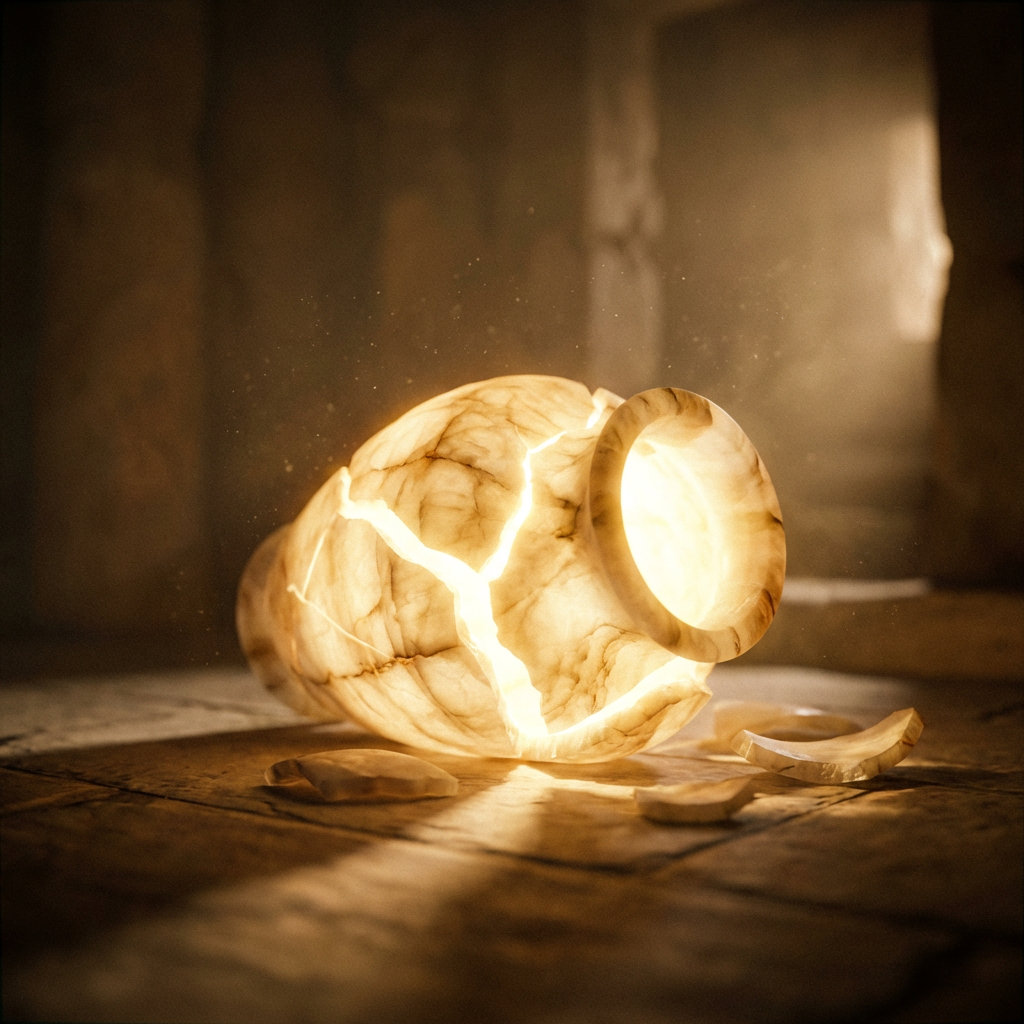
In one, a woman breaks open an alabaster jar of spikenard, a pure, expensive, extravagant oil and pours it over the feet of Jesus. The fragrance fills the whole house. She does not calculate the cost. She does not weigh the return. She simply gives the most precious thing she has to the most precious person she has ever known.
In the other, a man walks to the chief priests and asks a question. Not how can I serve Him but what will you give me?
Thirty pieces of silver.
Two people. One Savior. Two entirely different hearts.
What Mary Knew
Mary of Bethany had sat at His feet before. She had listened when others were busy. She had chosen, as Jesus once said, the better part. And now, with the shadow of the cross beginning to fall across the room, she did the only thing love knows how to do when words fail.
She gave everything.
The spikenard was worth a year’s wages. It was likely her most valuable possession. And she poured it out, not on His head as a king, but on His feet, wiping them with her hair, kneeling in the posture of someone who understands exactly who she is in the presence of exactly who He is.
She was not performing. She was not seeking recognition. She was worshipping.
And Jesus, who accepted it all, said something quietly devastating: She has done this for my burial.
Mary may not have fully understood what she was doing. But her love led her somewhere her mind had not yet caught up to. Love often does that. It moves toward Jesus before the reasoning arrives.
What Judas Chose
We do not know exactly what broke in Judas that week. The gospels give us pieces – his complaint about the waste of the perfume, his love of money, his willingness to negotiate. But underneath all of it is something that haunts us precisely because it is recognizable.
He had been close. He had seen the miracles. He had heard the teaching. He had broken bread at the same table, walked the same dusty roads, watched the same lame walk and blind see.
And still, he walked away and asked, what will you give me?
There is something in us that understands this more than we would like to admit. The slow drift from love to transaction. The moment when we begin to calculate rather than worship. When we hold something back. When we weigh the cost of full surrender and decide, quietly, that we are not quite willing.
We are capable of being very close to Jesus and very far from Him at the same time.
The Fragrance That Remains
Where have we been Mary – pouring out what is most precious, uncalculating, undone by love?
And where have we been something else entirely?
The beautiful thing about this story is that the fragrance of Mary’s offering lingered. Jesus said it would be told wherever the gospel is preached, in memory of her. Extravagant love leaves a mark. It fills the room. It does not evaporate.
Betrayal leaves a mark too, but of a different kind.
This Wednesday of Holy Week, in the quiet before the weight of Thursday and Friday descends, we are invited to choose our transaction.
Not thirty pieces of silver.
Not even our best reasoning or our most careful calculation.
Just the alabaster jar – cracked open, poured out, given freely to the One who is worth everything we have.
Lord, on this quiet Wednesday of Holy Week, we confess that we have sometimes been closer to calculation than to worship. We have held things back. We have weighed the cost of surrender and chosen something smaller. Forgive us. Soften us. Make us more like Mary – willing to break open what is precious, willing to kneel, willing to pour out love without counting what it costs. You are worth far more than anything we could offer. And still You receive it. Still You call it beautiful. Thank You. Amen.